PTA, Room Parents & Booster Clubs
Classroom fundraising without the candy bar script.
A branded store, one link, 30% back to your program.
No order forms, no envelopes of cash, no boxes in your garage. Build a store with your school logo on it, share the link with your families, and we print and ship every order direct. Thirty percent of what they spend goes to your program.
Why the old way underperforms
The problem with traditional school fundraisers
A $2 candy bar raises $1. That is 50% on paper, before the boxes that never come back, the volunteer hours spent chasing forms, and the pressure it puts on families who cannot comfortably buy. Wrapping paper and gift catalogs run the same way: high friction, low margin, and products nobody wanted in the first place.
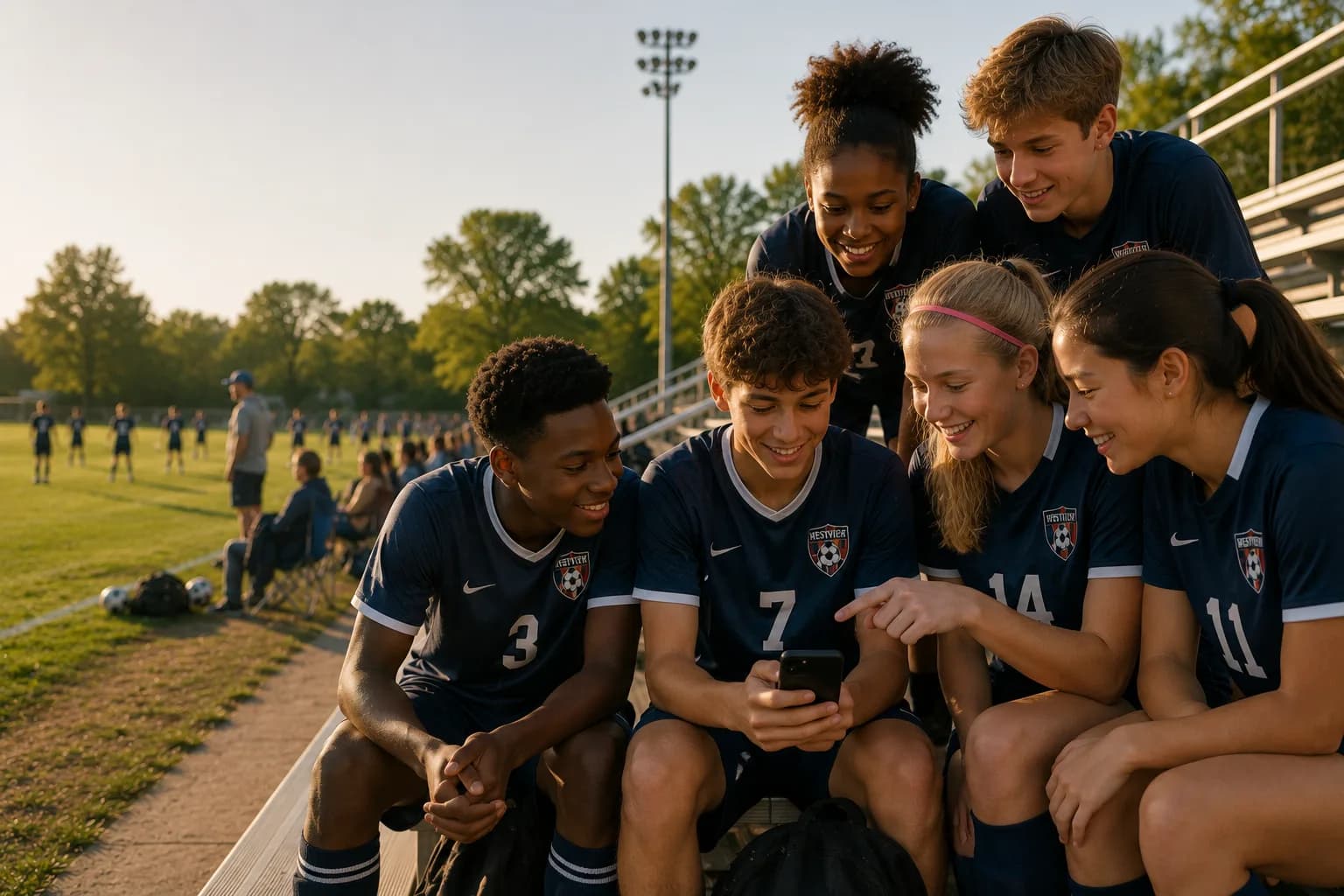
A merchandise store changes the dynamic. Nobody goes door to door. Families buy school spirit items because they want them, not because they feel obligated, and a tumbler with the mascot on it earns its own place in the cabinet. The program still gets funded — it just stops being a favor people are asked for.
Trusted by the people who order again
40,000+ orders shipped. Printed and engraved in Las Vegas.
40,000+
Orders shipped
13,900+
Verified reviews
4.97 ★
Average rating
How a campaign runs
Five steps, and none of them involve a spreadsheet.
Most coordinators have the store built in an afternoon and the link out the same night.
Build the store
Upload your school logo or mascot, pick your colors, choose the products you want to offer, and set a dollar goal. The store is live at the end of it with its own web address.
Share one link
Send the link through ClassDojo, Remind, email, or a group text. There is a share panel built into the page with a QR code for back-to-school night and the pickup line. No paper forms, no envelopes, no cash to count.
Families order and pay online
Each family orders what they want and pays by card. Before they check out, the store shows them exactly how much of their order goes to your program — which is the line that moves people from browsing to buying.
We print and ship
Every order is produced here in Las Vegas and shipped straight to the family who bought it. Nothing arrives at your house in boxes to sort. If you would rather receive everything in one shipment to hand out, that is an option too.
Your program gets paid
Thirty percent of every order is credited to your program and paid out by direct deposit one week after the last order ships — usually two to three weeks after your campaign closes. No platform fee, no setup cost, no minimum to clear.
What sells
Pick one anchor item and one impulse add-on.
The campaigns that work best offer a keepsake people will use plus something cheap enough to add without thinking. Live bulk pricing is published on every product page.
Custom tumblers
The highest dollar-per-order item and the one parents actually keep using. A school logo with the year on it becomes a keepsake rather than a donation receipt.
Contour-cut acrylic keychains
Your mascot cut to its own outline and UV printed. The low price point is what drives take rate — this is the item kids ask their parents for.
Custom vinyl stickers
The add-on that lifts almost every cart. Cheap enough that families add one without thinking about it, which raises the average order across the whole campaign.
Engraved luggage tags and drink tags
Anodized aluminum tags for travel teams and band trips, acrylic drink tags for carnivals and game nights. Useful items tied to a specific event sell better than generic spirit gear.
For bigger groups
When every kid needs their own page
A store with one shared link works for a classroom. Once you are running a whole team, a grade, or a booster club, the thing that actually moves the number is giving each participant their own page to send to their own people. That version is a campaign, and we set it up with you rather than through the builder.
- An individual page per participant, each with its own goal and share link
- A live progress bar and a leaderboard across the whole group
- A donation add-on at checkout for supporters who want to give beyond the product
- IRS fair-market-value disclosure on receipts for 501(c)(3) and booster orgs
- Tax-exempt ordering set up once on your account
If you would rather run it yourself
The bulk order path is still open
Some groups already have a pre-sell process that works and just want the product. That path has not changed: pre-sell to your families, collect payment, then place one consolidated order at tier pricing and keep the entire spread between what you paid and what you charged. The tradeoff is that you handle the money, the sorting and the distribution, and you carry the risk on anything that does not sell.
Bulk tier pricing starts at 5 units and improves at 25 and 50. Your exact price for the product and quantity you pick is shown live on the product page before you order. Model your own numbers.
Common questions
Questions, answered.
What does it cost to set up?
Nothing. There is no setup fee, no platform fee, and no minimum order quantity. You build the store, share the link, and your program is credited 30% of every order that comes through it. A finished campaign is paid whatever it earned — there is no balance minimum to clear.
Do we have to buy inventory up front?
No. Every item is produced after it is ordered and paid for. Your program never fronts money and never ends the campaign holding unsold boxes.
Who handles the money?
Families pay by card at checkout. You are not collecting cash, chasing envelopes, or reconciling a spreadsheet. Your program is credited as orders come in and paid out after the campaign closes.
How long should a campaign run?
Two to three weeks is the standard. Longer campaigns lose momentum and shorter ones do not reach the full parent base. Send the link at launch, remind at the midpoint, and remind again the day before it closes.
How fast do orders ship?
Standard production is 5-7 business days, and the clock starts once an order is paid and its artwork is approved. Transit time after that belongs to the carrier.
Can each student have their own page?
Yes, on a run-with-us campaign. Individual pages with their own goal and share link, a live progress bar, and a leaderboard across the group. The self-serve builder does not create those — email us and we will set the campaign up for you.
We are a 501(c)(3) or a school booster club. Can supporters donate on top of an order?
Yes, on a run-with-us campaign. A donation add-on sits alongside the products at checkout, and receipts carry the IRS fair-market-value disclosure that quid-pro-quo contributions require. Send us your EIN and tax status and we will set it up.
Can we still just place one bulk order instead?
Yes. If you would rather pre-sell yourself and place a single order at tier pricing, that path is unchanged and the bulk discounts are published live on every product page.
Ready when you are
Build your store tonight, share it tomorrow.
No setup fee, no minimum order, no inventory. Thirty percent of every order goes to your program, and standard production is 5-7 business days from paid and approved.
40,000+ orders shipped · We reply within 1 business day